In the world of texting and online chats, abbreviations and acronyms are everywhere. One term that’s been popping up frequently is OML.
Whether you’ve seen it in a group chat, on Instagram comments, or TikTok captions, you might have wondered what it stands for.
OML is a shorthand expression that saves time while conveying strong emotions or reactions.
People search for its meaning because understanding these acronyms can prevent miscommunication and help you stay connected with friends, colleagues, or online communities.
In this guide, we’ll break down everything about OML—from its definition to usage, variations across platforms, common mistakes, and practical responses.
Meaning & Definition
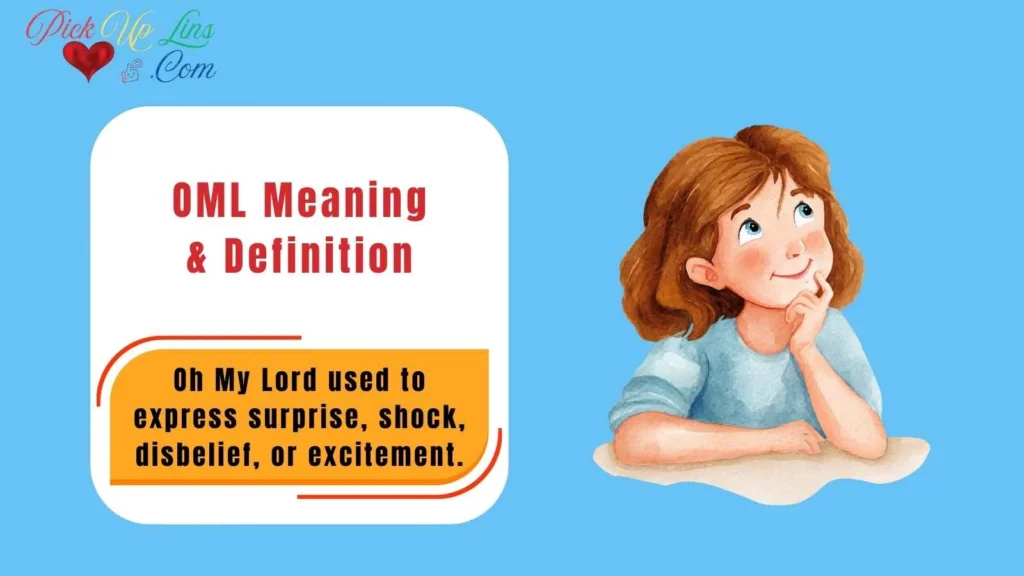
OML is an acronym primarily used in text messaging and online communication. Its primary meaning is:
- Oh My Lord — used to express surprise, shock, disbelief, or excitement.
It can also have secondary meanings in casual contexts:
- Oh My Life — expressing frustration or dramatic emotion.
- Sometimes humorously used as Oh My Laughter, depending on the context.
Quick Examples:
- “OML 😱 I can’t believe this happened!”
- “OML, my day is so stressful 😩”
OML is similar to other expressions like OMG (Oh My God) but is often considered slightly more casual or playful.
Background & Origin
The acronym OML originated from online chat culture in the early 2000s, when texting and instant messaging became mainstream.
Abbreviations were developed to save time and effort on mobile devices with small keyboards.
While OMG has been around longer, OML emerged as a variant to avoid religious connotations or just for playful stylistic purposes.
Social media platforms like Tumblr, Twitter, and later Instagram helped popularize the acronym, especially among teens and young adults.
Usage in Different Contexts
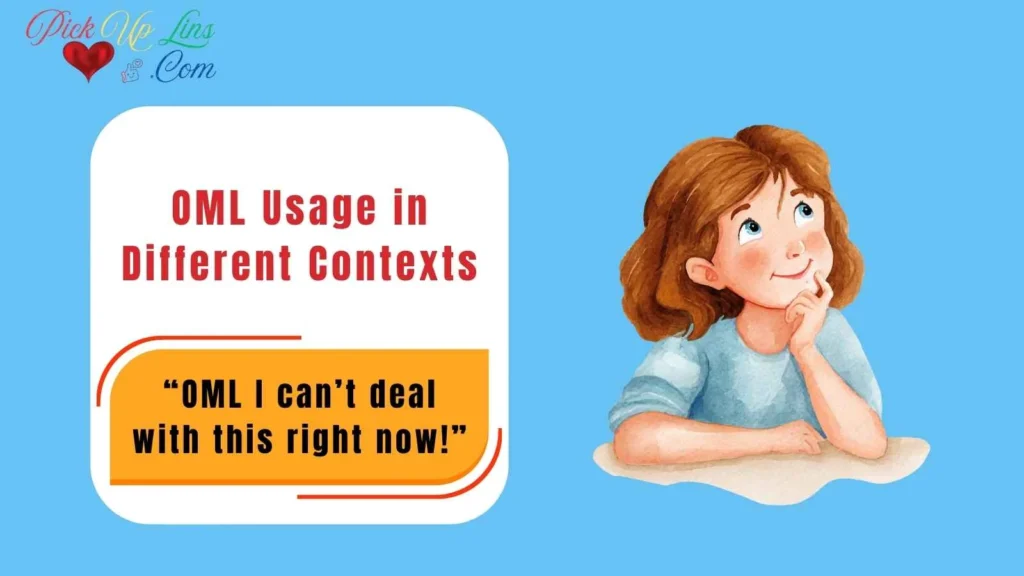
OML is versatile and appears in:
- Casual Chat: Expressing surprise, annoyance, or excitement.
- “OML 😭 I can’t deal with this right now!”
- Social Media Comments: Reacting to viral content or memes.
- “OML 😂 this video is hilarious!”
- Professional Settings: Rarely used; if used, it’s often in lighthearted, informal team chats.
- Messaging Apps: WhatsApp, Messenger, Discord — widely understood among younger audiences.
Tip: Always consider your audience; OML is casual, so avoid it in formal emails or professional reports.
Meanings Across Platforms
| Platform | Meaning/Use | Example |
|---|---|---|
| Expressing shock, excitement, or frustration | “OML 😱 just got the news!” | |
| Commenting on posts or stories | “OML 😂 this is so funny” | |
| TikTok | Reacting to viral trends | “OML I can’t stop laughing 🤣” |
| Snapchat | Messaging friends or story reactions | “OML, look at this 👀” |
Other Fields
While OML is mostly used online, it can also appear in technical contexts:
- Physics/Engineering: Could be shorthand in formulas, though rare.
- Medical: Abbreviations like OML may appear in medical notes (e.g., occipital-mastoid line in anatomy).
- Aircraft/Technical Manuals: Occasionally used in documentation, but context-specific.
Note: Always distinguish context to avoid confusion.
Common Misconceptions & Mistakes
- Mistaking OML for OMG — similar, but not identical in tone.
- Assuming it’s a formal abbreviation — it’s casual and informal.
- Overusing it in professional or serious contexts.
Similar Terms & Alternatives
| Term | Meaning | Difference from OML |
|---|---|---|
| OMG | Oh My God | Slightly more formal; religious connotation |
| OMFG | Oh My F***ing God | Stronger, explicit language |
| LOL | Laughing Out Loud | Focused on humor, not shock |
| SMH | Shaking My Head | Expresses disbelief, frustration |
How to Respond to It
When someone texts OML, your reply depends on the tone:
- Excited/Surprised:
- “Right?? I can’t believe it either 😱”
- Frustrated/Annoyed:
- “Same here 😩 this day is intense”
- Funny/Humorous:
- “OML 😂 you crack me up!”
- Neutral/Polite:
- “Wow, that’s unexpected!”
Differences From Similar Words
While OML overlaps with OMG, OML is more playful, sometimes dramatic, and slightly less common. OMG is universally recognized and can appear in formal contexts, unlike OML.
Relevance in Online Conversations & Dating Apps
OML is particularly useful in dating apps or texting new friends. It shows emotion without being too intense. For example:
- “OML 😅 I didn’t expect that reply!”
- “OML, you like hiking too? That’s awesome 🏔️”
It helps convey personality and relatability in short messages.
Popularity & Trends Over Time
According to social media trends and Google search data:
- Early 2000s: Rare, emerging in online forums.
- 2010–2015: Increased use in texting and memes.
- 2020–Present: Widely seen on Instagram, TikTok, and WhatsApp.
It remains popular among Gen Z and younger millennials.
FAQs:
- What does OML mean in texting?
- Oh My Lord, expressing surprise or frustration.
- Is OML the same as OMG?
- Similar, but more casual and playful.
- Can I use OML professionally?
- It’s best to avoid formal settings.
- Where did OML originate?
- From early 2000s online chat and social media culture.
- How do I reply to OML in texts?
- Match the tone: excited 😱, frustrated 😩, or humorous 😂.
Conclusion:
Understanding OML helps you navigate the ever-evolving language of online communication.
It’s a fun, casual way to express shock, excitement, or frustration without typing a full sentence.
Whether you’re chatting with friends, commenting on social media, or reacting to viral content, knowing OML ensures you stay in tune with modern digital conversations.
Next time you see OML pop up, you’ll not only know what it means but also how to respond naturally and effectively.
So go ahead—embrace the shorthand and join the conversation with confidence!