If you’ve ever been scrolling through social media, texting friends, or using chat apps, you might have stumbled upon “ION” and wondered what it means.
🤔 This abbreviation is becoming increasingly popular, especially among younger audiences, and it often leaves people scratching their heads.
Understanding ION meaning in text is essential for keeping up with modern digital conversations.
Whether you’re replying to a friend, commenting on TikTok, or decoding a message on WhatsApp, knowing how to interpret ION can save you confusion.
In this guide, we’ll break down the meaning, usage, origin, and even some technical contexts for this term.
1. Meaning & Definition

ION is primarily an abbreviation used in texting and social media. Its most common meaning is:
- I’m Only/Never — depending on context, it can convey casual conversation tones.
- I Don’t — sometimes used as shorthand in fast texting.
Secondary meanings can emerge in specific niches or communities:
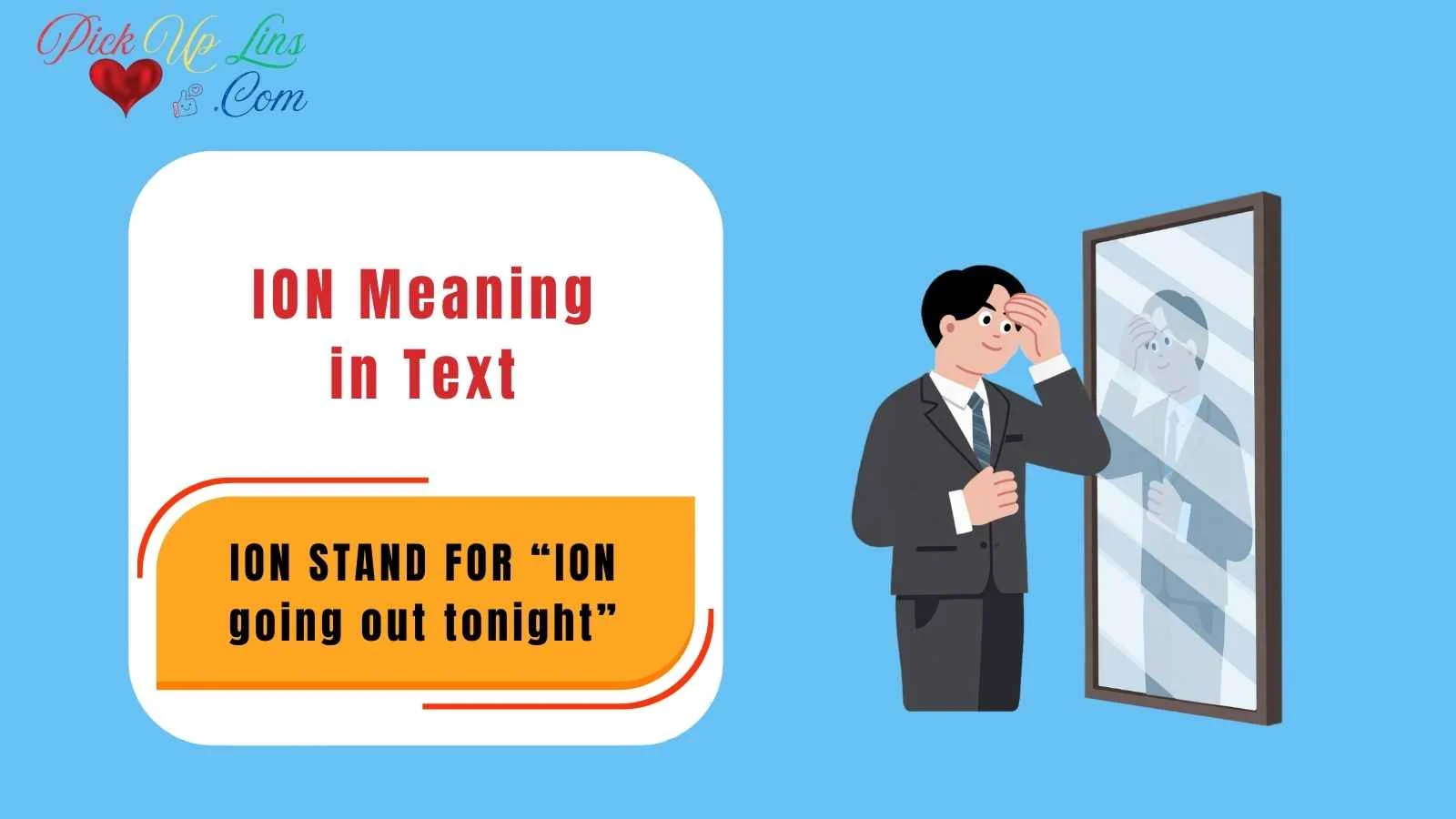
- In casual texting: “ION going out tonight” → “I’m not going out tonight.”
- In slang-heavy chats: “ION like that” → “I don’t like that.”
The context usually clarifies the intended meaning, making it a versatile term in modern digital language.
2. Background & Origin
The abbreviation ION originates from internet slang, where brevity is essential. Texting culture often creates shortcuts to save time and effort. Similar to terms like BRB (Be Right Back) or IDK (I Don’t Know), ION simplifies communication.
It gained traction around the mid-2010s on platforms like Twitter, Instagram, and Snapchat. Its flexibility made it popular with younger users who favor quick, efficient typing over full sentences.
3. Usage in Different Contexts
ION can appear across various online platforms and in different social contexts:
- Casual texting: Friends might use ION to express disinterest or refusal casually.
- Social media comments: It’s often used to convey personal opinions quickly.
- Professional chats: Rarely used formally, but can appear in quick internal messaging or informal company chats.
Example:
- “You coming to the party?” → “ION, got work 😅”
4. Meanings Across Platforms
| Platform | Usage Example | Interpretation |
|---|---|---|
| “ION feeling good today” | I’m not feeling good today | |
| “ION going to the event” | I’m not going to the event | |
| TikTok | Comment: “ION like this trend” | I don’t like this trend |
| Snapchat | DM: “ION rn” | I’m not right now |
The abbreviation adapts slightly depending on platform culture, but the core meaning remains similar.
5. Other Fields (Technical Meanings)
ION also has meanings outside texting:
- Physics: An atom or molecule with a net electric charge.
- Medical: ION can refer to Inferior Oblique Nerve in ophthalmology.
- Aviation/Tech: ION might be used as a shorthand for Ion propulsion systems or technical acronyms.
While context is key, most people searching for ION meaning in text are focused on the casual, digital usage.
6. Common Misconceptions & Mistakes
- Mistaking ION for ion (science term).
- Confusing it with IDN (I Don’t Know).
- Overusing it in formal communication, where it may seem unprofessional.
7. Similar Terms & Alternatives
| Term | Meaning | Example |
|---|---|---|
| IDK | I Don’t Know | “IDK what to eat 😅” |
| IMO | In My Opinion | “IMO this is the best choice” |
| TBH | To Be Honest | “TBH I didn’t like it” |
| ILY | I Love You | “ILY bro ❤️” |
8. How to Respond to It
Here are some practical ways to reply depending on context:
- Friend: “ION going to the mall.” → “No worries, maybe next time! 😄”
- Chat: “ION like that movie.” → “Same here, it wasn’t my favorite either.”
- Social: “ION rn” → “Got it, take your time!”
- Flirty text: “ION texting back fast 😏” → “I’ll make it up to you 😉”
9. Differences From Similar Words
Unlike IDK or TBH, ION focuses on refusal, negation, or disinterest rather than uncertainty or opinion. It’s a subtle but meaningful distinction in casual chats.
10. Relevance in Online Conversations & Dating Apps
ION is particularly relevant in dating apps where brevity is essential. A user might say:
- “ION into small talk 😅”
- “ION texting late at night”
It communicates preferences and boundaries quickly without lengthy explanations.
11. Popularity & Trends Over Time
Using Google Trends data, searches for ION meaning in text spike among teens and young adults, often correlating with viral social media challenges or slang lists. Platforms like TikTok and Instagram frequently accelerate its adoption.
FAQs:
Q1: What does ION mean in texting?
A: It usually means “I’m not” or “I don’t,” depending on context.
Q2: Is ION slang?
A: Yes, it’s informal internet slang.
Q3: Can I use ION in professional messages?
A: It’s best reserved for casual chats.
Q4: Does ION have other meanings?
A: Yes, it also appears in science, medical, and tech contexts.
Q5: How is ION different from IDK?
A: ION expresses negation or refusal; IDK expresses uncertainty.
Conclusion:
Understanding ION meaning in text can save you from confusing moments in chats, social media, or online communities.
While it originated as casual slang, it’s now widely recognized among younger audiences and adaptable across platforms.
Whether you’re replying to friends, participating in trends, or just decoding messages, ION offers a concise, flexible way to communicate negation or disinterest.
Remember, context is key — and with this guide, you can confidently read, interpret, and even use ION in your digital conversations. Stay savvy, stay social, and embrace the fun of modern texting!