Ever seen someone type “ASL?” in a chat or on social media and wondered what it means? You’re not alone. This three-letter acronym has puzzled many, especially newcomers to online conversations, dating apps, and messaging platforms.
ASL meaning in text is one of those abbreviations that has been around for decades yet remains relevant in modern digital communication.
People often search for it to avoid misunderstandings, respond correctly in chats, or simply decode conversations with friends or online strangers.
Whether you’re texting, messaging on social media, or using dating apps, knowing ASL can help you connect better and keep conversations flowing smoothly.
1. Meaning & Definition
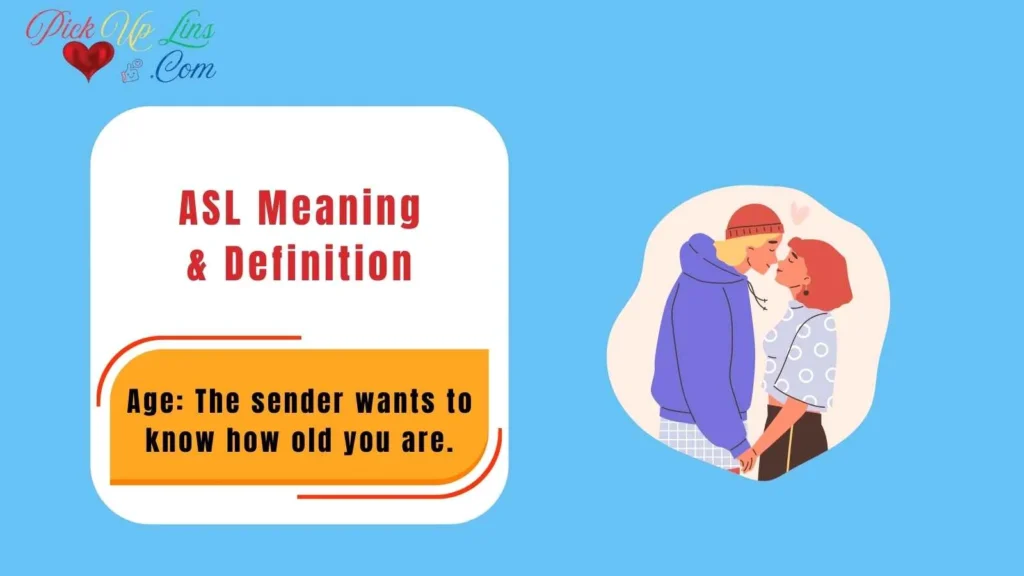
ASL primarily stands for Age, Sex, Location. It’s a shorthand question people use to get basic information quickly in text chats. For example:
- ASL? = “Hey, what’s your age, sex, and location?”
Primary Meaning
- Age: The sender wants to know how old you are.
- Sex: They are asking your gender.
- Location: Refers to your city, state, or country.
Secondary Meanings
While the most common usage is in chatting and dating, ASL can sometimes appear in other contexts as an abbreviation:
- American Sign Language – used in educational and accessibility contexts.
- Advanced Squad Leader – a tabletop game for enthusiasts.
Knowing the primary meaning helps in casual conversations, while being aware of secondary meanings prevents confusion when encountering the term elsewhere.
2. Background & Origin
The abbreviation ASL dates back to the early days of Internet Relay Chat (IRC) in the 1980s and 1990s. Online communities wanted a quick way to ask for basic personal info without typing long sentences.
This shorthand became especially popular in chat rooms, instant messaging, and early online dating forums.
As the internet evolved, ASL spread across platforms like AOL Instant Messenger, MSN Messenger, and Yahoo Chat, eventually making its way to modern apps such as WhatsApp, Instagram, and Snapchat.
Its simplicity made it ideal for rapid communication, which explains why it has endured even in today’s fast-paced digital world.
Interestingly, while most people associate ASL with dating or social chat, the term’s other meaning—American Sign Language—has a rich history dating back to the early 19th century, developed to assist deaf and deaf -of-hearing individuals in communication.
3. Usage in Different Contexts
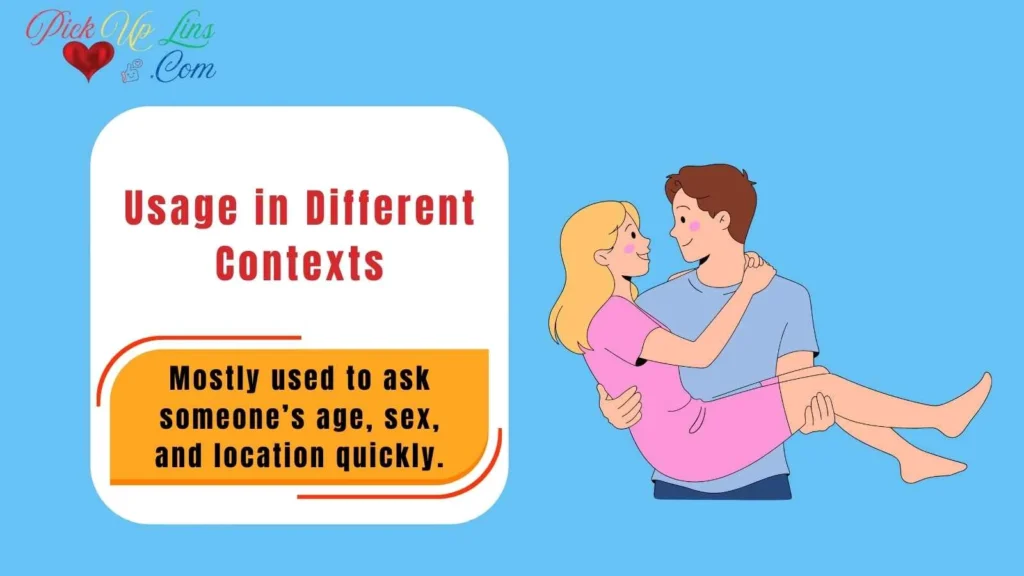
ASL isn’t just a dating chat term. Its context can change meaning:
- Casual Chat & Social Media: Mostly used to ask someone’s age, sex, and location quickly.
- Example: “ASL? 😊”
- Dating Apps: Common in early conversation starters to gauge compatibility.
- Professional or Educational Contexts: Here, ASL often refers to American Sign Language, especially in academic or accessibility-related discussions.
By recognizing the context, you can avoid awkward misunderstandings and respond appropriately.
4. Meanings Across Platforms
| Platform | Common Usage | Notes |
|---|---|---|
| Age, Sex, Location | Quick personal chats | |
| Instagram DM | Casual chatting | Often seen in comments or stories |
| TikTok | Trendy comment slang | Sometimes playful or humorous |
| Snapchat | Social connection | Quick exchange between friends |
Each platform slightly affects tone. On TikTok, ASL may appear as a joke, while on WhatsApp it’s often serious.
5. Other Fields
Beyond texting, ASL appears in other areas:
- Physics & Engineering: “Allowable Stress Limit” in structural engineering.
- Medical Field: “Advanced Support Life” in emergency medicine.
- Aircraft/Technical Use: May denote altitude, signal, or language system depending on context.
Being aware of these alternative uses ensures you don’t misinterpret technical conversations.
6. Common Misconceptions & Mistakes
- Mistake: Assuming ASL always means American Sign Language in chats.
- Misconception: Ignoring context; ASL in professional forums likely isn’t asking for your age, sex, or location.
- Solution: Always read the conversation’s tone and platform context.
7. Similar Terms & Alternatives
| Term | Meaning | Notes |
|---|---|---|
| AGE | Age only | Less invasive than ASL |
| LOC | Location only | Often used in gaming chats |
| GENDER | Gender only | Focused question, avoids other info |
8. How to Respond to It
Practical Replies:
- “24, female, New York 🙂”
- “I’d rather not share personal info 😅”
- “20/F/California 🌴”
- “Why do you ask? Just curious 😏”
Respond based on your comfort level and the platform’s context.
9. Differences From Similar Words
ASL differs from abbreviations like ETA (estimated time of arrival) or BRB (be right back).
The main difference: ASL asks for personal information, whereas most chat abbreviations describe actions or status.
10. Relevance in Online Conversations & Dating Apps
ASL remains relevant in dating apps and chat rooms for quick introductions. Despite being an older term, it still appears because:
- Users want efficient conversation starters
- It’s widely recognized
- It provides a neutral way to ask for basic info without long explanations
11. Popularity & Trends Over Time
According to Google Trends, searches for “ASL meaning in text” spike among:
- Teens and young adults in chat-heavy platforms
- Dating app users
- Internet language enthusiasts
Social media analysis shows ASL’s use has decreased slightly in professional messaging but remains strong in casual online chats.
FAQs:
1. What does ASL mean in texting?
- Age, Sex, Location.
2. Is ASL still used today?
- Yes, mostly in casual chats and dating apps.
3. Does ASL mean American Sign Language?
- Sometimes, depending on context.
4. How do I respond to ASL?
- Share your info or politely decline.
5. Are there safer alternatives to ASL?
- Use AGE, LOC, or simply ask questions naturally.
Conclusion:
Understanding ASL meaning in text is essential for anyone navigating online chats, social media, or dating apps.
While it originally stood for Age, Sex, Location, the term’s usage has expanded across platforms and contexts.
Being aware of its different meanings—like American Sign Language in educational settings or technical definitions in other fields—helps avoid confusion.
By knowing how to respond politely, recognizing platform-specific usage, and understanding related abbreviations, you can communicate more confidently online.
Whether you’re making new friends, meeting people on dating apps, or simply decoding chat messages, ASL is a small but significant part of digital conversation.